
 中文
中文
 English
 Russian
 Thai
Thai
 Indonesian
 Vietnamese
 Portuguese, Portugal
 French
 日本
日本
 Korean
 Hindi
Hindi
 Spanish
 Turkish
 Arabic
 Bahasa Malaysia
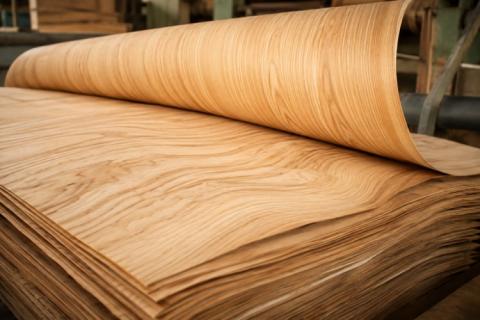
A Thin Slice of Real Wood
What Is Sliced Veneer? It is a thin layer of real wood cut from a log or flitch with a knife. Unlike rotary veneer, slicing produces individual veneer sheets with distinctive natural surfaces. The USDA describes veneer as thin wood pieces cut with a knife, with thickness varying by application.
We like sliced veneer because it keeps the personality of natural timber. Its grain pattern can show straight lines, cathedral shapes, rays, or striking figures. In other words, one tree can offer plenty of visual surprises.
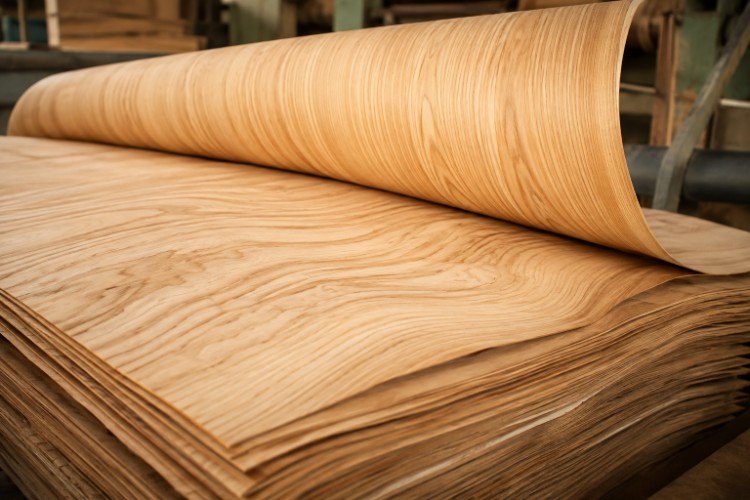
How Is Sliced Veneer Produced?
From Log to Cut Veneer
The process begins with careful log selection. Workers consider wood species, diameter, defects, grain direction, and the desired appearance. Then, the log or flitch moves to a slicing machine that cuts thin layers with a sharp knife.
Each cut veneer sheet requires careful handling afterward. Workers usually clip, grade, stack, and inspect the sheets. According to the USDA, equipment setup and maintenance strongly influence veneer uniformity and surface quality.
Why Does Veneer Need Drying?
Fresh Veneer Holds Moisture
Fresh veneer contains considerable water, so manufacturers must control its moisture content. This makes the drying process a key stage in modern veneer production. Without proper control, sheets may buckle, split, stain, or develop uneven moisture.
We never view drying as simply “making wood less wet.” The real target involves stable sheets, consistent moisture, and reliable drying results. That difference can save manufacturers plenty of headaches later.
What Makes High Quality Veneer?
Appearance Meets Stability
High quality veneer needs more than beautiful color. We also consider thickness, flatness, surface condition, grain appearance, and moisture uniformity. The USDA identifies thickness uniformity, smoothness, flatness, checks, color, and figure as important veneer properties.
Good veneer quality also depends on the final application. Furniture manufacturers may prioritize decorative figure, while plywood producers often focus more on consistency. Therefore, the production target should guide the entire process.
How Can Drying Improve Veneer?
Control Heat and Airflow
Effective veneer drying requires balanced heat and airflow. Too little energy can extend drying time, while excessive heat can increase defects. An experienced manufacturer therefore adjusts drying conditions according to species, thickness, and starting moisture.
Our goal with a wood veneer dryer is not simply maximum temperature. We focus on optimized drying that balances speed, energy use, uniformity, and final quality. A modern Veneer Dryer Machine can help maintain these conditions during continuous production.
Consistency Matters More Than Speed
Fast drying sounds attractive, but speed alone proves very little. If half the sheets leave with uneven moisture, production soon pays the price. Good equipment should deliver stable drying results across the working width.
We recommend monitoring key factors such as:
- 🌡️ Drying temperature
- 💨 Airflow
- 💧 Moisture content
- 📏 Veneer thickness
- ⏱️ Drying time
- ⚙️ Production speed
These parameters help operators fine-tune the process instead of relying on guesswork.
Why Choose Sliced Veneer?
Natural Grain With Efficient Material Use
Sliced veneer offers an attractive balance between natural beauty and material efficiency. Manufacturers can create large decorative surfaces from relatively thin layers of valuable timber. The cutting method also allows designers to arrange sheets into book-matched and other visual patterns.
For us, successful veneer production connects every stage. Good logs create better raw material, accurate slicing reveals the grain, and controlled drying protects the final product. When those steps work together, beautiful wood stays beautiful—and that is the whole point.
- Inicie sesión o registrese para enviar comentarios