
 中文
中文
 English
 Russian
 Thai
Thai
 Indonesian
 Vietnamese
 Portuguese, Portugal
 French
 日本
日本
 Korean
 Hindi
Hindi
 Spanish
 Turkish
 Arabic
 Bahasa Malaysia
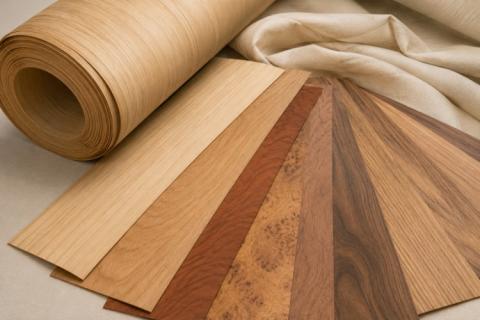
Natural wood veneer brings the beauty of real wood to furniture, doors, panels, and interiors. But what exactly makes it different from solid wood or engineered veneer? In simple terms, natural veneer is a thin layer of real wood cut from a log. We use it to create beautiful surfaces while making better use of each wood species.
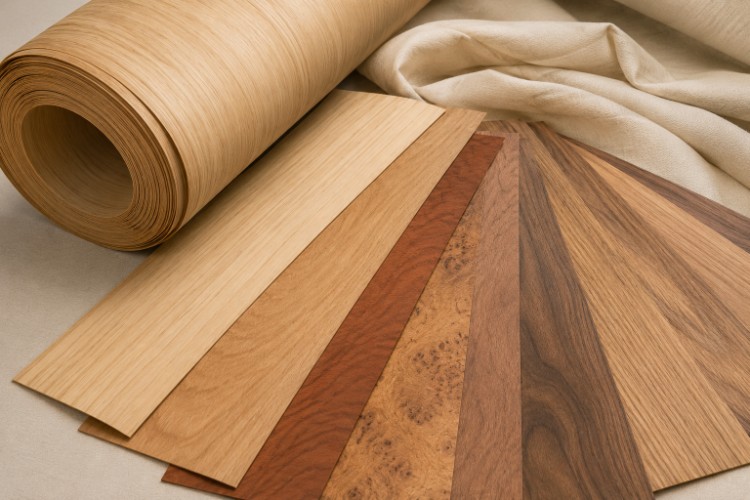
What Is Natural Wood Veneer?
A Thin Layer of Real Wood
Natural veneer comes directly from natural logs. Manufacturers cut the log into thin sheets of veneer using different cutting methods. Unlike printed finishes, real wood veneer keeps the original grain, color, texture, and character of the tree.
This makes every panel slightly different. We think that is part of its charm. A small knot, a changing grain pattern, or a subtle color shift can make a piece feel truly alive.
Natural Veneer vs. Solid Wood
Solid wood uses thick sections of lumber throughout the product. Natural veneer uses a thin wood surface over a stable substrate. Common substrates include plywood, MDF, and particle board.
Veneer can therefore reduce material use while still delivering a premium wood appearance. It also gives designers access to rare exotic wood species without using large amounts of valuable timber.
How Do Manufacturers Cut Veneer?
Rotary Cut Veneer
The rotary cut method spins a log against a long knife. The knife removes a continuous layer, almost like peeling paper from a giant roll. This method creates wide sheets and makes efficient use of the log.
Rotary cut veneer often shows bold, repeating cathedral patterns. It also works well for many plywood applications.
Rift Cut and Sliced Veneer
Manufacturers can also slice veneer from a log section by section. Rift cut veneer creates a straighter and more uniform grain appearance. It works especially well with species such as oak.
Sliced veneer can also produce more controlled patterns. The cutting direction strongly affects the final appearance, so choosing the right method matters.
Why Does Veneer Drying Matter?
Controlling Moisture
Fresh veneer contains significant moisture after cutting. The drying process reduces moisture and prepares the sheets for later processing. Poor drying can lead to cracking, warping, shrinkage, or uneven moisture content.
We focus heavily on this stage because good drying supports stable veneer production. Controlled temperature, airflow, and drying time all affect the final quality.
From Wet Sheets to High Quality
A modern Veneer Dryer Machine helps manufacturers dry wood veneers continuously and consistently. Different species and thicknesses require different drying conditions. Therefore, operators must match the drying process with the material.
For us, the goal remains simple: dry efficiently while protecting the natural beauty of the wood.
What Are the Main Types of Veneer?
Common Veneer Choices
There are several types of veneer based on cutting method, appearance, and application:
- Rotary cut: Wide sheets with dramatic grain patterns.
- Plain sliced: Familiar cathedral or straight grain.
- Rift cut: Straighter and more consistent grain.
- Quarter cut: Distinctive straight grain and ray patterns.
- Book matched: Two consecutive sheets create a mirror image.
- Slip matched: Sheets follow the same grain direction.
Book matched veneer can create a striking symmetrical surface. It works particularly well on doors, cabinets, and feature panels.
Why Choose Natural Wood Veneer?
Beauty, Efficiency, and Choice
Natural veneer gives designers enormous flexibility. They can select different wood species, grain patterns, thicknesses, and quality grades. They can also create premium surfaces without turning every project into a solid-wood heavyweight.
We especially value veneer because it connects modern manufacturing with a natural resource. With careful veneer production, manufacturers can use valuable timber more efficiently.
A Natural Finish With Character
Natural wood veneer does not try to look like wood. It actually comes from wood. That small difference matters when customers care about texture, authenticity, and long-term appearance.
Engineered veneer can offer consistent colors and patterns, while natural veneer delivers genuine variation. For many projects, that small touch of unpredictability is exactly what makes the finished product special.
Final Thoughts
So, what is natural wood veneer? It is a thin layer of real wood that captures the character of a tree in a practical form. Cutting method, drying quality, wood species, and matching technique all influence the final result.
At Shine Machinery, we believe good veneer starts long before the final panel reaches a furniture factory. It starts with careful veneer production, controlled drying, and respect for the material. When those steps work together, even a thin sheet can make a big impression.
References
USDA Forest Products Laboratory — Techniques for Peeling, Slicing, and Drying Veneer
- Inicie sesión o registrese para enviar comentarios