
 中文
 English
 Russian
 Thai
 Indonesian
 Vietnamese
 Portuguese, Portugal
 French
 日本
 Korean
 Hindi
 Spanish
 Turkish
 Arabic
 Bahasa Malaysia
Veneer Drying Process: Complete Guide
Veneer drying can make or break an entire production line. Dry too little, and glue may struggle to bond properly. Dry too much, and valuable wood becomes brittle, cracked, or difficult to handle. At Shandong Shine Machinery, we believe successful veneer production starts with understanding how moisture, temperature, and airflow work together. This guide explains each stage and shares practical tips for achieving high quality veneer with less waste.
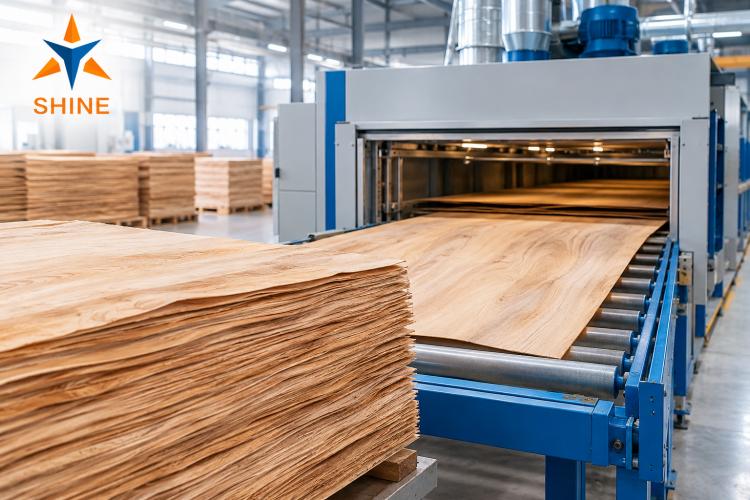
What Is the Veneer Drying Process?
The veneer drying process removes excess water from freshly peeled wood sheets. Manufacturers must control moisture content before applying adhesive or producing plywood. Proper drying improves handling, bonding performance, and final product consistency. However, every wood species behaves differently, so one drying schedule rarely suits every batch.
Modern veneer dryers use controlled heat and circulating air to remove moisture quickly. Depending on the equipment, manufacturers can process individual sheets or continuous veneer strips. Our goal is simple: achieve uniform drying without sacrificing wood quality or wasting energy.
Step-by-Step Veneer Drying Process
Step 1: Prepare the Raw Material
First, operators inspect wet veneers and remove sheets with serious defects. They check thickness, wood species, initial moisture, and visible damage. These factors influence drying speed and the settings required for each batch. Sorting the raw material helps prevent inconsistent results later.
Step 2: Feed Veneer Sheets into the Dryer
Next, operators feed the prepared sheets into the drying line. Conveyor systems move the veneer through heated chambers at a controlled speed. Correct feeding prevents overlapping, uneven exposure, and unnecessary production interruptions. A well-organized veneer stack also helps maintain smooth handling after drying.
Step 3: Apply Heat and Control Airflow
Inside the dryer, hot and humid air transfers heat to the wood surface. Heat encourages water to evaporate, while circulating air carries moisture away. Operators adjust temperature, airflow, humidity, and conveyor speed to match production needs. Effective control matters more than simply turning up the heat.
Step 4: Reach the Target Moisture Content
As drying continues, the veneer gradually loses moisture. Operators must avoid both underdrying and overdrying during this stage. Many plywood operations target approximately 6–12% moisture, depending on the wood and adhesive system. Always confirm the correct range against your product specifications and bonding requirements.
Step 5: Inspect, Grade, and Stack the Dried Veneer
After drying, operators measure veneer moisture and inspect the sheets for cracks, curling, and discoloration. They separate unsuitable sheets and organize acceptable material by grade or intended use. Consistent results help manufacturers prepare veneer sheets for gluing and hot pressing. At this stage, the material should be ready to be glued when it meets the required specifications.
Key Factors That Affect Veneer Drying
Initial Moisture and Wood Thickness
Wet veneers with higher initial moisture usually require more drying time. Thick sheets also need more time than thin sheets under similar conditions. Wood species and differences between heartwood and sapwood can further change drying behavior. Therefore, operators should assess the raw material before selecting a drying schedule.
Temperature, Airflow, and Humidity
Higher temperatures can accelerate moisture removal, but excessive heat may damage veneer quality. Weak airflow can leave some areas wetter than others. Meanwhile, humidity air conditions influence how quickly water escapes from the wood. Balanced temperature, air velocity, and humidity help produce consistent results.
Conveyor Speed and Equipment Performance
Conveyor speed determines how long each sheet remains inside the dryer. If the line moves too quickly, some sheets may leave too wet. If it moves too slowly, the process may waste energy or overdry the material. Regular maintenance and accurate controls help keep production stable.
How to Improve Drying Quality and Efficiency
We recommend focusing on a few practical measures rather than changing every setting at once.
- Monitor moisture: Test samples from different positions and batches.
- Adjust drying parameters: Match temperature and conveyor speed to veneer thickness and species.
- Maintain airflow: Clean filters, inspect fans, and check air distribution regularly.
- Reduce heat loss: Maintain insulation and evaluate opportunities for heat recovery.
- Track energy consumption: Compare energy use with production volume and moisture removal.
- Inspect finished sheets: Look for cracks, curling, uneven color, and moisture variation.
These steps help manufacturers improve drying technology and reduce avoidable waste. A well-selected Veneer Dryer Machine can support stable output when operators configure it correctly. Still, good equipment cannot compensate for poor material preparation or neglected maintenance.
Common Veneer Drying Problems and Solutions
| Problem | Possible Cause | Practical Solution |
|---|---|---|
| Veneer remains too wet | Short drying time or weak airflow | Adjust conveyor speed and inspect fans |
| Sheets become brittle | Excessive drying or heat | Review temperature and final moisture |
| Moisture varies across sheets | Uneven airflow or mixed raw materials | Improve sorting and air distribution |
| Energy consumption rises | Heat loss or inefficient settings | Inspect insulation and optimize operation |
| Veneer curls or cracks | Uneven shrinkage or harsh conditions | Adjust the drying schedule and monitor quality |
Remember, faster drying does not automatically mean better production. The best settings balance throughput, energy use, and consistent product quality.
Choose the Right Drying Solution
Different factories need different drying capacities, heating systems, and conveyor configurations. Your choice should reflect veneer thickness, wood species, target moisture, daily output, and available energy sources. Manufacturers should also consider floor space, maintenance access, automation, and future production growth.
At Shandong Shine Machinery, we understand that every production line has its own challenges. We encourage buyers to evaluate actual production requirements before selecting equipment. The right solution can help improve industrial veneer processing, reduce waste, and maintain reliable output.
Conclusion
A successful veneer drying process combines proper material preparation, controlled heating, balanced airflow, and accurate moisture checks. When manufacturers manage these factors carefully, they can improve veneer quality and reduce unnecessary energy consumption. We believe consistent results come from combining suitable drying technology with practical operating procedures. If you are planning a new line or upgrading existing equipment, our team can help you explore a suitable solution.
Contact Shandong Shine Machinery to discuss your veneer specifications, production capacity, and drying requirements.