
 中文
中文
 English
 Russian
 Thai
Thai
 Indonesian
 Vietnamese
 Portuguese, Portugal
 French
 日本
日本
 Korean
 Hindi
Hindi
 Spanish
 Turkish
 Arabic
 Bahasa Malaysia
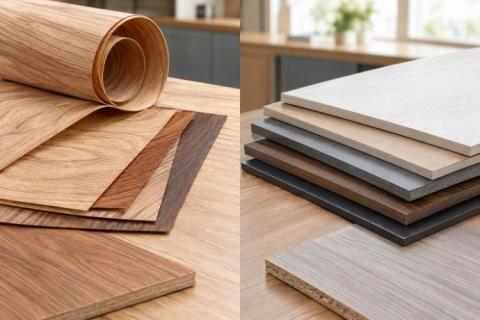
Veneer vs Laminate: The Basic Difference
When we compare veneer and laminate, the first question is simple: what is actually on the surface? Wood veneer uses a thin layer of real wood. Laminate uses engineered layers with a printed decorative surface. Both can create attractive furniture, cabinets, doors, and wall panels, but they behave differently.
Veneer Uses Real Wood
Veneer starts with natural timber. Manufacturers slice logs into thin veneer sheets and select them for color, texture, and grain. Each sheet carries genuine grain patterns, so small differences make every panel feel more natural. We think this variation gives veneer its personality.
During veneer production, manufacturers must control cutting, sorting, drying, and handling. Proper drying matters because fresh veneer contains significant moisture. A reliable drying process helps prepare sheets for later pressing and finishing.
Laminate Creates a Consistent Surface
Laminate takes another route. Manufacturers combine decorative paper and resin layers under heat and pressure. High-pressure laminate, or HPL, uses high pressure and heat to create a durable surface.
The biggest advantage is consistency. A laminate pattern can look almost identical across dozens of panels. That sounds boring, but sometimes boring is exactly what a project needs.
Appearance: Natural Character vs Uniform Design
If appearance drives your decision, veneer has a strong advantage. Natural veneer surfaces show real timber variation, including knots, color shifts, and changing grain direction. These details can make furniture feel warmer and more expensive.
Why Real Wood Looks Different
No two trees grow in the same way. Therefore, no two natural veneer sheets look completely identical. We can arrange sheets to create book-matched, slip-matched, or other visual effects.
This process requires careful selection. A high-quality veneer project depends on good logs, accurate slicing, proper drying, and skilled matching. The final result can look remarkably close to solid timber while using much less wood.
Where Laminate Has the Edge
Laminate wins when you need predictable design. Modern products can imitate oak, walnut, stone, concrete, and many other materials. Some textured products even combine printed patterns with surface textures.
That consistency helps large commercial projects. Imagine installing 80 cabinet doors and discovering that every natural wood panel looks slightly different. For some designers, that is beautiful. For others, it is a Tuesday afternoon headache.
Durability and Wear and Tear
The answer becomes less obvious when we discuss wear and tear. Laminate generally handles scratches, stains, and everyday contact better than veneer. This makes it useful for busy kitchens, offices, retail spaces, and other high-use areas.
When Laminate Makes More Sense
Choose laminate when the surface will face heavy daily use. It offers a practical combination of durability, easy cleaning, and design consistency.
Typical applications include:
- Kitchen cabinet fronts
- Office desks
- Retail furniture
- School furniture
- High-traffic storage units
- Commercial wall panels
Laminate also works well when the project needs a controlled appearance. You can order the same pattern again without relying on natural timber variation.
When Veneer Can Be the Better Choice
Veneer requires more care, but it offers one major advantage: repairability. Depending on its thickness and finish, professionals can lightly sand and refinish some damaged veneer surfaces. Laminate usually cannot receive the same type of refinishing.
Veneer therefore suits premium furniture, feature walls, doors, reception areas, and spaces where natural character matters more than maximum scratch resistance.
Cost, Maintenance, and Long-Term Value
Price often settles the argument. Laminate usually costs less because manufacturers can produce decorative patterns consistently at large scale. Veneer requires real timber, careful cutting, sorting, drying, and finishing. That extra work affects the final price.
Which Material Needs More Care?
Laminate generally needs less maintenance. A soft cloth and suitable cleaner can handle most everyday dirt. Veneer needs more attention because its surface contains genuine wood.
Keep veneer away from prolonged moisture and excessive heat. Protect the finish from harsh chemicals and direct sunlight when possible. Good finishing also plays a major role in long-term performance.
Think Beyond the Surface
We always recommend looking at the entire panel, not just the decorative layer. The substrate, adhesive, pressing process, edge treatment, and finishing quality all affect the final product.
A beautiful veneer on a poor substrate will not become a premium product. Likewise, an excellent laminate on a weak panel can still fail. The surface matters, but the construction underneath matters too.
How Veneer Production Affects Quality
Good veneer begins long before the sheet reaches a furniture factory. Log selection, peeling or slicing, clipping, grading, and drying all influence the final result. Moisture control is especially important because manufacturers need stable sheets for later processing.
Why Drying Matters
Freshly cut veneer can contain high moisture levels. Manufacturers must remove moisture carefully without causing excessive cracks, deformation, or other defects.
A well-designed Veneer Dryer Machine helps manufacturers control drying conditions and maintain production efficiency. Roller dryers, mesh belt dryers, and other systems suit different veneer types and production requirements.
For example, delicate face veneer may require gentler handling than thicker core veneer. Choosing the right drying method can improve sheet quality while supporting stable production.
Veneer vs Laminate: Which Is Better?
So, Veneer vs Laminate: Which Is Better? Our answer is simple: neither material wins every project. The better choice depends on the surface's job, your budget, design goals, and expected level of use.
|
Factor |
Veneer |
Laminate |
|
Material |
Real wood |
Engineered decorative material |
|
Appearance |
Natural variation |
Consistent patterns |
|
Grain patterns |
Genuine |
Printed or designed |
|
Scratch resistance |
Moderate |
Generally higher |
|
Maintenance |
Moderate |
Low |
|
Refinishing |
Often possible |
Usually not practical |
|
Design consistency |
Lower |
High |
|
Natural feel |
Excellent |
Good to excellent |
|
Typical cost |
Medium to high |
Low to medium |
|
Best use |
Premium furniture and interiors |
High-use surfaces |
For natural beauty, choose veneer. For heavy wear and easy maintenance, laminate often makes more sense. If you want both, combine them in different areas of the same project.
Our Final Recommendation
We would choose veneer when natural wood character is the priority. Genuine veneer surfaces create visual depth that printed patterns cannot fully reproduce. They also allow manufacturers to use thin layers of valuable timber instead of building an entire panel from solid wood.
We would choose laminate when durability, consistency, and simple maintenance come first. Neither option is automatically “better.” The smartest choice matches the material to the job.
For manufacturers, the story starts even earlier. Better veneer production creates better raw material for furniture and interior applications. With proper drying, handling, and finishing, natural veneer can deliver a high-quality surface that remains attractive for years.