
 中文
中文
 English
 Russian
 Thai
Thai
 Indonesian
 Vietnamese
 Portuguese, Portugal
 French
 日本
日本
 Korean
 Hindi
Hindi
 Spanish
 Turkish
 Arabic
 Bahasa Malaysia
Stop Veneer Overdrying: 7 Smart Tips
Overdrying can turn valuable wood veneer into brittle sheets that crack, curl, or lose quality. Worse, every damaged sheet means wasted timber, energy, and production time. At Shandong Shine Machinery, we believe effective veneer drying requires more than high temperatures and fast production speeds. The real goal is simple: remove enough moisture without damaging the wood.
In this guide, we share seven practical ways to prevent veneer overdrying. These methods help manufacturers improve consistency, reduce waste, and produce high quality veneer for plywood production.
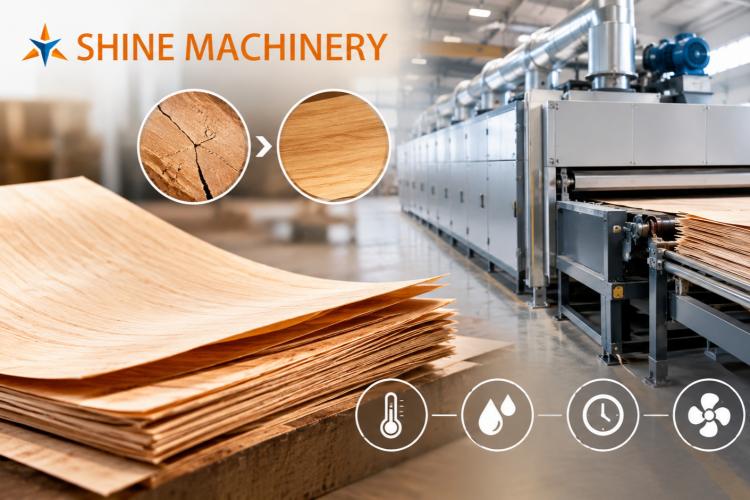
Set the Correct Final Moisture Content
Moisture content (MC) determines when veneer reaches its target drying condition. If operators remove too much water, the sheets may become brittle and develop cracks. However, insufficient drying can weaken adhesive bonding and cause problems during plywood pressing.
Therefore, we recommend setting a clear moisture target before production begins. The ideal value depends on wood species, veneer thickness, adhesive requirements, and the final application.
Measure Moisture Instead of Guessing
- Check moisture content at regular intervals.
- Use calibrated moisture meters or suitable sampling methods.
- Compare readings from different sheets and dryer positions.
- Adjust settings when measurements show consistent deviations.
For many plywood applications, manufacturers use approximately 6%–12% moisture content as an initial reference range. However, always confirm the target against your material and bonding requirements. A reliable measurement beats a confident guess every time.
Control Temperature and Humidity Together
High temperatures can accelerate evaporation, but excessive heat may damage sensitive veneer. Low humidity can also increase moisture loss and create uneven drying. Consequently, operators should manage temperature and humidity as connected variables.
Our approach focuses on balancing heat input with moisture removal. Suitable dry conditions depend on wood species, thickness, initial moisture content, and dryer design. Avoid increasing the temperature simply because production seems slow.
Why Humidity Air Matters
The humidity of circulating air affects how quickly water leaves the veneer. Very dry air can increase surface drying before moisture inside the sheet has enough time to escape. Proper humidity control helps operators manage this process more consistently.
For example, industrial systems may use temperatures around 130°C–200°C and controlled air humidity. These figures describe certain equipment applications, not universal operating settings. Always follow the recommended drying schedule for your specific veneer and machine.
Adjust Drying Time to Veneer Thickness
Not all veneer sheets dry at the same speed. Thin sheets generally release moisture faster than thick veneers. Using one fixed drying time for every thickness can therefore create unnecessary defects.
We recommend grouping veneer by thickness whenever production conditions allow. Operators should then adjust conveyor speed and temperature according to test results.
Practical Adjustments for Different Sheets
- Thin veneer: Reduce exposure time when measurements show excessive moisture loss.
- Thick veneers: Allow sufficient drying time without overheating the surface.
- Mixed thicknesses: Separate batches when possible to improve consistency.
- Variable initial moisture: Test representative sheets before changing the entire production schedule.
Remember, faster drying does not always mean better production. A few extra seconds may save a batch from costly damage.
Maintain Even Airflow Inside the Dryer
Uneven airflow creates different drying conditions across the same production line. Some sheets may receive excessive heat, while others remain too wet. This variation makes consistent moisture control much harder.
A well-designed Veneer Dryer Machine should distribute hot air evenly across the drying chamber. Operators should also check fans, air ducts, screens, and exhaust systems regularly.
Check These Key Components
- Circulation fans: Inspect performance and unusual vibration.
- Air passages: Remove dust and debris that restrict airflow.
- Conveyor screens: Keep surfaces clean to support steady air movement.
- Exhaust controls: Ensure moist air leaves the chamber as intended.
- Temperature sensors: Verify readings against calibrated instruments.
Good airflow improves drying uniformity without relying on excessive heat. It also helps operators identify equipment problems before they affect product quality.
Monitor the Drying Process Continuously
A dryer setting that worked yesterday may not suit today's raw material. Wood species, log storage, initial moisture, and ambient conditions can all change the drying response. Therefore, we recommend monitoring production rather than relying entirely on preset timers.
Record inlet moisture, outlet moisture, temperature, humidity, and conveyor speed. Review these readings together to identify patterns and correct problems early.
Use Data to Improve Each Batch
- Collect samples from different positions across the dryer.
- Compare actual moisture readings with the target range.
- Track brittle sheets, cracks, and other drying defects.
- Change one operating variable at a time.
- Record successful settings for future production runs.
This process helps operators find the cause of overdrying instead of repeatedly adjusting settings without clear evidence. Over time, reliable records can reduce waste and improve production efficiency.
Handle Dried Veneer Carefully
Veneer quality can deteriorate even after sheets leave the dryer. Excessive exposure to dry air may change moisture levels during storage. Rough handling can also damage sheets that have already become fragile.
We recommend transferring dried veneer promptly to a suitable storage area. Keep stacks clean, flat, and protected from direct heat and unnecessary air exposure. Also, avoid placing heavy or uneven loads on delicate sheets.
Prevent Moisture Changes After Drying
- Check storage conditions regularly.
- Protect veneer from direct sunlight and strong drafts.
- Keep stacks away from leaks and wet floors.
- Minimize unnecessary handling and repeated restacking.
- Inspect representative sheets before plywood assembly.
Remember that drying does not end when the conveyor stops. Proper storage helps preserve the quality achieved inside the dryer.
Maintain Equipment and Review Drying Settings
Worn components and inaccurate sensors can quietly increase production losses. A temperature sensor may report incorrect values, or a fan may deliver less airflow than expected. These problems can push the drying process outside its intended operating range.
We recommend establishing a preventive maintenance schedule. Inspect sensors, motors, fans, conveyor systems, and humidity controls at planned intervals. After maintenance, verify the operating settings before returning to full production.
Build a Simple Quality Checklist
Before each production run, confirm the following:
Temperature and humidity sensors work correctly.
Fans provide stable, even airflow.
Conveyor speed matches the selected drying schedule.
Moisture sampling equipment gives reliable readings.
Operators know the target moisture content.
Final sheets meet quality and bonding requirements.
A short checklist can prevent a long list of avoidable problems. Consistent maintenance also helps equipment deliver predictable results over time.
Conclusion: Dry Smarter, Not Harder
Preventing veneer overdrying requires balanced temperature, controlled humidity, suitable drying time, and accurate moisture measurement. Manufacturers should also consider veneer thickness, airflow, storage conditions, and equipment maintenance. By managing these factors together, we can reduce cracks, protect valuable timber, and improve production consistency.
At Shandong Shine Machinery, we believe the best drying process removes excess water without sacrificing veneer quality. If your production line struggles with brittle sheets or inconsistent moisture content, reviewing your drying settings is a practical first step. Better control today can mean less waste and more high quality veneer tomorrow.