
 中文
 English
 Russian
 Thai
 Indonesian
 Vietnamese
 Portuguese, Portugal
 French
 日本
 Korean
 Hindi
 Spanish
 Turkish
 Arabic
 Bahasa Malaysia
How to Prevent Veneer Cracking? 8 Proven Tips
Veneer cracking is a common problem in plywood and wood processing factories. It affects product quality, increases material waste, and raises production costs. Even a small crack can reduce the value of an otherwise perfect veneer sheet.
So, how can manufacturers prevent veneer cracking? The answer involves more than simply lowering the drying temperature. Raw material selection, initial moisture content, cutting quality, airflow, and drying conditions all play important roles.
At Shandong Shine Machinery, we understand these challenges. We believe that stable veneer drying requires both proper equipment and careful process management. In this guide, we share eight practical ways to reduce cracking and maintain high quality throughout production.
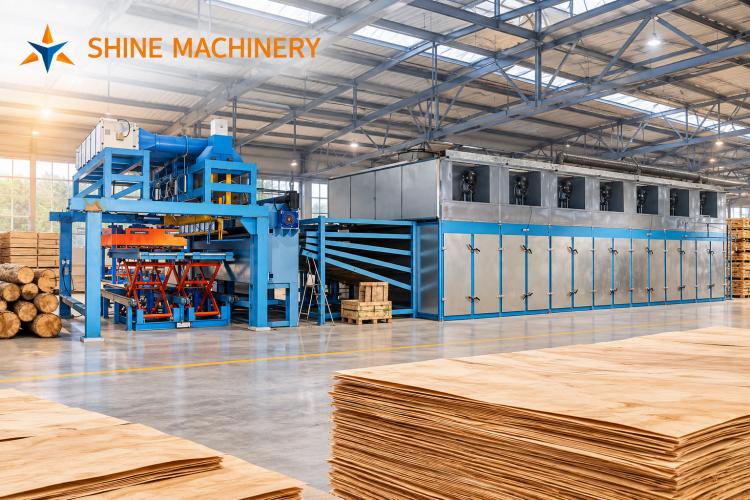
1. Understand Why Veneer Cracks During Drying
Before preventing cracks, we need to understand how they develop. Veneer contains moisture within its cell walls and internal structures. As the material dries, it loses water and begins to shrink. However, different parts of the sheet may shrink at different rates.
This uneven shrinkage creates internal stress. When the stress exceeds the strength of the wood, cracks can appear. Excessive heat, rapid moisture loss, and poor raw material conditions can make the problem worse.
Common Causes of Veneer Cracking
Several factors can increase the risk of cracking during veneer drying:
- Excessive drying temperature: High temperatures can accelerate surface moisture loss and increase drying stress.
- Uneven moisture content: Different moisture levels across one sheet can cause uneven shrinkage.
- Excessive drying speed: Rapid moisture removal may create stress inside the veneer.
- Improper veneer thickness: Different thicknesses require different drying conditions.
- Poor peeling quality: Deep knife checks and mechanical damage can weaken the sheet.
- Incorrect airflow: Uneven hot air distribution can produce inconsistent drying results.
- Overdrying: Removing too much moisture can make veneer brittle and easier to damage.
Understanding these causes helps manufacturers identify the real problem instead of adjusting machine settings blindly.
2. Control the Initial Moisture Content
Initial moisture content has a major influence on veneer drying. Freshly peeled veneer usually contains considerable water. However, different wood species and logs can produce different moisture levels.
When manufacturers mix very wet and relatively dry sheets, they create additional challenges. The same drying schedule may not suit every sheet. Consequently, some veneer may become too dry while other sheets remain too wet.
How to Manage Initial Moisture
We recommend several practical steps:
- Measure the moisture content of incoming veneer.
- Separate sheets with significantly different moisture levels.
- Group veneer according to wood species and thickness.
- Avoid leaving freshly peeled veneer exposed to uncontrolled weather.
- Record moisture variations between production batches.
A moisture meter provides useful information for daily production management. Regular measurements also help operators identify unusual changes before they cause serious defects.
Most importantly, manufacturers should establish suitable initial moisture ranges for different materials. This simple step makes the entire drying process easier to control.
3. Adjust the Drying Temperature Carefully
Temperature directly affects how quickly veneer loses moisture. However, higher temperatures do not always produce better results.
When hot air heats the veneer too quickly, the surface may dry faster than the inner layers. This difference creates a moisture gradient and increases internal stress. Under unfavorable conditions, the veneer may develop cracks or other drying defects.
Choose a Suitable Temperature Schedule
We suggest considering these factors before adjusting temperature settings:
- Wood species and natural drying characteristics.
- Veneer thickness and sheet dimensions.
- Initial moisture content.
- Target final moisture content.
- Dryer structure and heating capacity.
- Production speed and local operating conditions.
For example, thick veneers generally need more careful temperature management than thin sheets. They contain more moisture and require additional time for moisture movement.
Operators should avoid sudden temperature increases. Instead, they should use a controlled heating schedule and monitor the results at different production stages.
Remember, the goal is not to make veneer dry as quickly as possible. The goal is to achieve stable moisture levels without damaging the wood.
4. Maintain Proper Airflow and Humidity
Temperature gets plenty of attention, but airflow deserves equal consideration. Hot air carries heat to the veneer surface and removes evaporated moisture. If airflow becomes uneven, different areas may dry at different speeds.
For instance, excessive airflow in one section may cause local overdrying. Meanwhile, weak airflow in another section may leave some sheets too wet. Both conditions can reduce production quality.
Improve Air Circulation Inside the Dryer
To maintain consistent airflow, manufacturers should:
- Inspect circulation fans regularly.
- Clean air passages and filters.
- Check dampers and ventilation openings.
- Maintain balanced air distribution across the drying section.
- Monitor air temperature and relative humidity.
- Remove accumulated dust and other obstructions.
Humidity control also matters. Extremely dry air can increase the drying rate and intensify moisture loss from the veneer surface.
A properly designed drying system should balance temperature, humidity, and air velocity. These three factors work together to determine drying performance.
5. Pay Special Attention to Thick Veneers
Thick veneers present different drying challenges. Their internal moisture needs more time to move toward the surface. Therefore, the surface and core may reach different moisture levels during drying.
If operators apply the same schedule to every thickness, problems can quickly appear. Thin sheets may become overdried, while thick sheets may retain excessive moisture.
Optimize the Drying Process for Thickness
We recommend separating veneer into suitable thickness groups before production. Operators should then establish different drying schedules according to material characteristics.
Here are several useful practices:
- Measure veneer thickness at multiple positions.
- Avoid mixing significantly different thicknesses.
- Adjust drying speed according to thickness.
- Monitor the final moisture content of thick sheets.
- Check for cracks after the sheets leave the dryer.
For example, a 1.2 mm veneer sheet and a 3.0 mm sheet should not automatically share identical drying settings.
Thicker material may require a longer drying period and more careful control. This approach helps reduce internal stress and protects veneer quality.
6. Improve Veneer Peeling and Cutting Quality
Not every crack starts inside the dryer. Some defects begin during log preparation and veneer peeling.
A peeling knife can create small checks along the veneer surface. These defects may become more noticeable during drying. Poor knife condition, incorrect knife settings, and unsuitable log preparation can all contribute to the problem.
Reduce Mechanical Damage Before Drying
Manufacturers should pay attention to several production details:
- Keep peeling knives sharp and properly adjusted.
- Check knife pressure and cutting conditions.
- Maintain suitable log temperature and moisture conditions.
- Avoid unnecessary mechanical handling.
- Remove seriously damaged sheets before drying.
Knife checks and drying cracks are not exactly the same defect. However, existing mechanical damage can weaken veneer and affect its final appearance.
We believe prevention should start before the veneer enters the drying section. Better peeling quality gives the dryer a much better starting point.
7. Avoid Overdrying and Control Final Moisture
Overdrying is another important cause of veneer quality problems. When operators remove too much moisture, veneer can become brittle and difficult to handle.
Dry sheets may develop cracks during transportation, stacking, or subsequent processing. Overdrying can also affect adhesive performance during plywood manufacturing.
How to Prevent Overdrying
A reliable moisture control procedure should include:
- Establishing a target final moisture content for each application.
- Using calibrated moisture measurement equipment.
- Checking samples from different dryer positions.
- Adjusting conveyor speed when necessary.
- Inspecting veneer immediately after drying.
- Avoiding unnecessarily long drying times.
The ideal final moisture content depends on the wood species, adhesive system, and manufacturing requirements. Therefore, manufacturers should not rely on one universal moisture target.
For many plywood applications, a controlled moisture range around 6%–12% may serve as a starting point. However, actual production requirements should determine the final setting.
Regular testing provides much better control than simply judging veneer by appearance.
8. Choose a Reliable Veneer Dryer Machine
Equipment performance has a direct influence on veneer drying quality. Even experienced operators may struggle when a dryer cannot maintain stable temperature and airflow.
A reliable Veneer Dryer Machine should provide consistent heating, balanced air circulation, and adjustable drying parameters. These features help manufacturers handle different wood species and veneer thicknesses.
Important Equipment Features
When selecting drying equipment, we recommend evaluating the following:
| Feature | Why It Matters |
|---|---|
| Temperature control | Helps prevent excessive heating |
| Air circulation system | Supports uniform drying |
| Adjustable conveyor speed | Controls drying time |
| Humidity management | Helps regulate moisture removal |
| Insulation structure | Reduces unnecessary heat loss |
| Monitoring system | Helps operators track production conditions |
Modern drying equipment can also support more efficient energy management. However, energy savings should never come at the expense of veneer quality.
At Shandong Shine Machinery, we focus on practical drying solutions for industrial veneer production. We understand that every factory has different raw materials, production capacities, and operating requirements.
Therefore, choosing suitable equipment requires more than comparing machine prices. Manufacturers should also consider production targets, material characteristics, and long-term operating costs.
9. Establish a Daily Veneer Quality Inspection System
Even a well-designed drying process needs regular inspection. Small changes in raw materials or machine conditions can affect production results.
Without proper inspection, operators may discover cracking only after large quantities of veneer have already passed through the dryer. That means unnecessary waste and additional production costs.
A Simple Daily Inspection Checklist
We recommend checking the following items during production:
Inspect veneer surfaces for visible cracks.
Measure initial moisture content.
Check final moisture content regularly.
Record drying temperature and conveyor speed.
Inspect airflow and circulation fans.
Compare drying results between different thicknesses.
Check veneer flexibility and surface condition.
Record defects and identify their possible causes.
Production records can reveal patterns that operators might otherwise overlook. For example, repeated cracks in one dryer section may indicate uneven airflow.
A simple inspection routine often prevents much larger problems. After all, finding one problem early beats discovering an entire batch of damaged veneer.
Conclusion
Preventing veneer cracking requires attention throughout the production process. Raw material quality, peeling conditions, initial moisture, temperature, airflow, and final moisture all influence the results.
We recommend combining proper process management with reliable drying equipment. Manufacturers should also adjust drying parameters according to wood species and veneer thickness. Most importantly, they should monitor actual drying results instead of relying on fixed settings alone.
At Shandong Shine Machinery, we believe stable drying performance starts with the right equipment and practical production experience. Our goal is to help manufacturers reduce material waste, improve efficiency, and produce high quality veneer.
Are you experiencing veneer cracking during production? Contact Shandong Shine Machinery to discuss your drying requirements. Our team can help you explore suitable veneer drying solutions for your factory.