
 中文
 English
 Russian
 Thai
 Indonesian
 Vietnamese
 Portuguese, Portugal
 French
 日本
 Korean
 Hindi
 Spanish
 Turkish
 Arabic
 Bahasa Malaysia
What Is Continuous Veneer Drying?
What Is Continuous Veneer Drying?
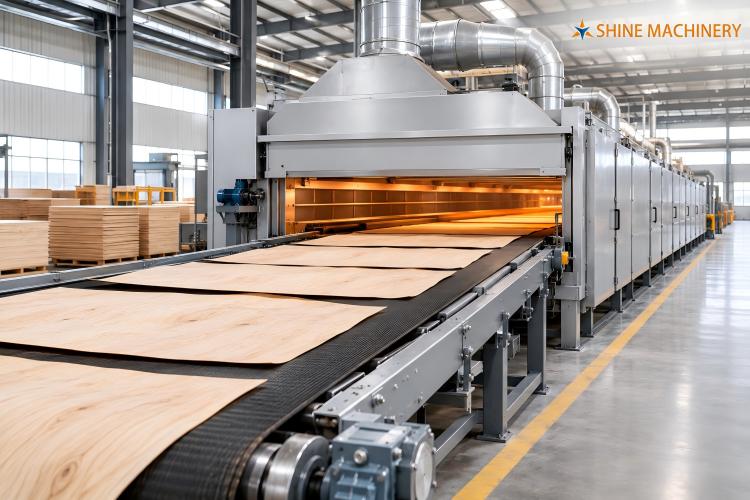
Continuous veneer drying is an industrial process that removes excess moisture from wood veneer as sheets move through a dryer. Unlike batch drying, this method keeps production moving with a steady flow of material. At Shandong Shine Machinery, we see continuous drying as a practical way to improve efficiency and maintain consistent quality. It helps manufacturers turn wet veneers into sheets that are ready to be glued.
The process combines controlled heat, airflow, humidity, and feeding speed. Together, these factors determine the final moisture content and overall drying results. Think of it as a production line where every sheet gets its own trip through a carefully managed climate.
How Does Continuous Veneer Drying Work?
1. Feeding Wet Veneers
First, operators feed wet veneers into the dryer at a controlled speed. The machine moves each sheet through heated sections using conveyor systems. Consistent feeding helps prevent overlaps, jams, and uneven exposure to heat. It also gives operators better control over drying time.
2. Applying Hot and Humid Air
Inside the dryer, hot and humid air transfers heat to the veneer surface. The heat encourages moisture to move from inside the wood toward the surface. Meanwhile, circulating air carries away evaporated water. As drying continues, the system balances temperature, airflow, and humidity air conditions to support stable moisture removal.
3. Controlling Final Moisture Content
The dryer gradually reduces veneer moisture until sheets reach the target level. The ideal setting depends on wood species, thickness, adhesive requirements, and the next production stage. Operators can adjust temperature, conveyor speed, and airflow to achieve better control. These adjustments help produce high quality veneer without excessive brittleness or unwanted cracks.
4. Discharging Dry Veneer
Finally, the conveyor delivers dry veneer for inspection, stacking, and further processing. Manufacturers check moisture content before sending veneer sheets to gluing or hot pressing. Consistent results reduce production problems and support reliable plywood or LVL production.
Why Choose Continuous Veneer Drying?
A well-designed continuous system offers several advantages for commercial veneer production. However, the best results depend on proper machine settings and regular maintenance.
- Higher production efficiency: A steady material flow supports large-volume manufacturing.
- Consistent veneer quality: Controlled drying helps reduce wet spots and overdried areas.
- Better process control: Operators can adjust drying conditions to match different veneer specifications.
- Reduced energy consumption: Optimized drying can limit unnecessary heat loss and excessive drying.
- Less material waste: Stable conditions help protect sheets from cracks, curling, and brittleness.
A reliable Veneer Dryer Machine can therefore support both productivity and product quality. Still, faster production does not automatically mean better results. If operators push conveyor speeds too high, the sheets may leave before reaching their target moisture level.
What Factors Affect Drying Results?
Veneer Thickness and Initial Moisture
Thicker sheets usually need more time to release internal moisture. Wet veneers with higher initial moisture also require greater drying capacity. Therefore, manufacturers should consider incoming material conditions before selecting operating settings.
Temperature, Airflow, and Humidity
Temperature affects how quickly moisture evaporates, while airflow removes moisture from around the sheets. Humidity also matters because saturated air cannot carry away moisture as effectively. Properly balanced conditions help the drying process remain stable without exposing veneer to unnecessary heat.
Feeding Speed and Dryer Design
Conveyor speed determines how long veneer stays inside the drying chamber. A longer residence time may improve moisture removal, but it can also increase energy use. Modern dryer designs combine suitable heating zones and airflow management to support optimized drying. Operators should test settings and monitor actual results rather than rely on guesswork.
How Can Manufacturers Improve Continuous Drying?
We recommend a few practical steps for more reliable production:
- Measure incoming and outgoing veneer moisture regularly.
- Sort veneer sheets by thickness and wood species when practical.
- Keep fans, filters, and air passages clean.
- Adjust conveyor speed according to moisture readings.
- Inspect dried sheets for cracks, curling, and uneven moisture.
- Review heat recovery options to help reduce energy consumption.
These steps help manufacturers maintain consistent output while avoiding unnecessary drying time. They also make it easier to identify problems before they affect an entire production batch.
Choose the Right Solution for Your Production Line
Continuous veneer drying helps manufacturers maintain steady output, control moisture content, and prepare sheets for downstream processing. The right equipment should match your veneer thickness, production capacity, fuel source, and target moisture level. At Shandong Shine Machinery, we focus on practical drying solutions that balance performance, product quality, and operating costs.
Looking to improve your veneer production line? Contact Shandong Shine Machinery to discuss your raw materials, required capacity, and drying goals. Our team can help you evaluate a suitable drying solution for your operation.