
 中文
 English
 Russian
 Thai
 Indonesian
 Vietnamese
 Portuguese, Portugal
 French
 日本
 Korean
 Hindi
 Spanish
 Turkish
 Arabic
 Bahasa Malaysia
Why Does Veneer Warp During Drying?
Veneer warping can turn valuable wood sheets into frustrating production waste. Curled edges, wavy surfaces, and twisted sheets often signal problems during drying. At Shandong Shine Machinery, we believe manufacturers should solve these problems at their source. Understanding the causes helps us improve efficiency, reduce waste, and produce high quality veneer.
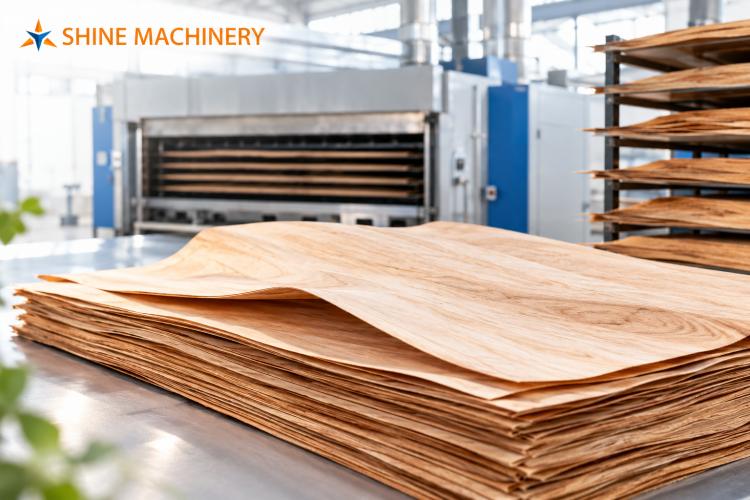
What Causes Veneer to Warp During Drying?
Wood naturally changes shape as it loses moisture. However, uneven moisture loss can make veneer warp more severely. Different wood species also shrink at different rates during drying. Therefore, manufacturers must control both raw materials and drying conditions.
1. Uneven Moisture Content
Uneven moisture content ranks among the main causes of veneer warping. Some areas lose water faster than others, creating internal stress. For example, sheet edges may dry faster than the center. This difference can cause the edges to curl or the entire sheet to buckle.
We recommend checking incoming veneer for moisture variations. Group sheets with similar initial moisture levels whenever practical. Consistent starting conditions make the drying process easier to control.
2. Excessive Drying Temperature
High temperatures can remove moisture too quickly. The surface may dry before the inner layers release enough water. This imbalance can increase drying stress and damage delicate veneer sheets. Fast drying might look productive, but damaged products rarely improve profits.
Instead, adjust the temperature according to wood species, thickness, and initial moisture. Monitor drying results before increasing heat. A stable process often delivers better results than simply chasing higher production speeds.
3. Incorrect Airflow and Humidity
Hot air must reach veneer sheets evenly. Blocked air passages, unbalanced fans, or inconsistent airflow can create uneven drying. Consequently, some areas become too dry while others remain damp.
Humidity also affects how quickly wood releases moisture. Extremely dry air may accelerate surface drying and increase stress. We suggest checking fan performance, air circulation, and humidity regularly. Small adjustments can prevent expensive quality problems.
4. Differences in Veneer Thickness
Veneer thickness affects drying speed and moisture movement. Thin sheets usually release moisture faster than thick veneers. When operators process different thicknesses under unsuitable settings, some sheets may overdry while others remain wet.
For better results, sort veneer by thickness whenever possible. Then, select suitable drying parameters for each group. Consistent thickness helps operators maintain predictable drying conditions.
5. Natural Wood Characteristics
Not every veneer sheet behaves the same way. Wood species, grain direction, knots, and growth stresses can influence dimensional changes. Some sheets may naturally curl even when operators manage the dryer carefully.
We cannot eliminate every natural variation. However, we can inspect raw materials and separate visibly damaged sheets. Better sorting helps reduce defects before drying begins.
How Can You Prevent Veneer Warping?
Preventing warping requires more than changing one temperature setting. Instead, manufacturers should manage the entire veneer drying process. Here are five practical measures we recommend.
1. Control Drying Parameters
Set temperature, airflow, and humidity according to the material. Avoid sudden changes without checking their effects. Record successful settings for different wood species and thicknesses.
2. Monitor Final Moisture Content
Use a suitable moisture meter to check representative sheets. Measure samples from different positions and production batches. Follow the moisture requirements of your next processing stage.
There is no single target for every application. The correct moisture content depends on wood species, adhesive requirements, and intended use.
3. Maintain Consistent Air Circulation
Inspect fans, filters, ducts, and air passages regularly. Remove blockages and investigate uneven drying patterns. Consistent airflow helps reduce moisture differences across each sheet.
4. Allow Proper Cooling and Conditioning
Hot veneer may still contain uneven moisture after leaving the dryer. Allowing suitable cooling or conditioning can help moisture levels stabilize. Handle sheets carefully and avoid exposing them to sudden humidity changes.
5. Choose Suitable Drying Equipment
A well-designed Veneer Dryer Machine helps manufacturers control temperature and airflow throughout production. However, equipment performance also depends on correct operation and maintenance. We recommend evaluating capacity, veneer thickness, heating methods, and moisture control before choosing a system.
How Does the Right Dryer Improve Veneer Quality?
Reliable drying equipment helps manufacturers maintain stable production conditions. Consistent airflow and suitable temperature control can reduce uneven drying. These improvements support better flatness, fewer defects, and more predictable production.
At Shandong Shine Machinery, we understand that every sheet represents raw materials, energy, and working time. That is why we believe practical process control matters as much as production speed. The goal is simple: dry veneer efficiently without sacrificing quality.
Conclusion
Veneer warping usually results from uneven moisture loss, unsuitable temperatures, poor airflow, or natural wood characteristics. Fortunately, manufacturers can reduce these risks through careful sorting, parameter control, and regular equipment maintenance. With suitable drying conditions, producers can improve consistency and reduce material waste.
Are you experiencing veneer warping in your production line? Contact Shandong Shine Machinery to discuss your drying requirements and explore a suitable drying solution for your factory.