
 中文
中文
 English
 Russian
 Thai
Thai
 Indonesian
 Vietnamese
 Portuguese, Portugal
 French
 日本
日本
 Korean
 Hindi
Hindi
 Spanish
 Turkish
 Arabic
 Bahasa Malaysia
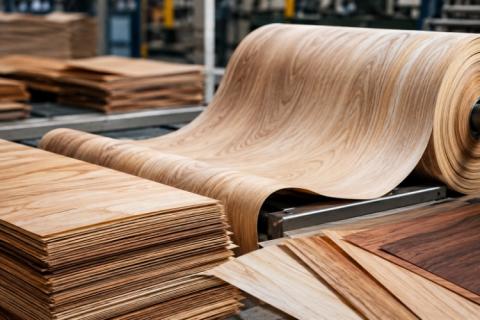
Wood looks solid, but it does not always need to be thick to make a strong visual impression. Wood veneer turns valuable timber into thin, useful layers. It allows manufacturers to enjoy the beauty of real wood while using less raw material.
So, What Is Wood Veneer exactly? In simple terms, it is a thin layer of natural wood cut from a log or flitch. Manufacturers use knives or saws to create thin slices and sheets. These sheets can then become furniture surfaces, plywood, doors, panels, and many other products.
We work with veneer production equipment, so we see this process from a practical angle. Good veneer starts with suitable logs, accurate cutting, and careful veneer drying. A small mistake during these stages can create a surprisingly large headache later.
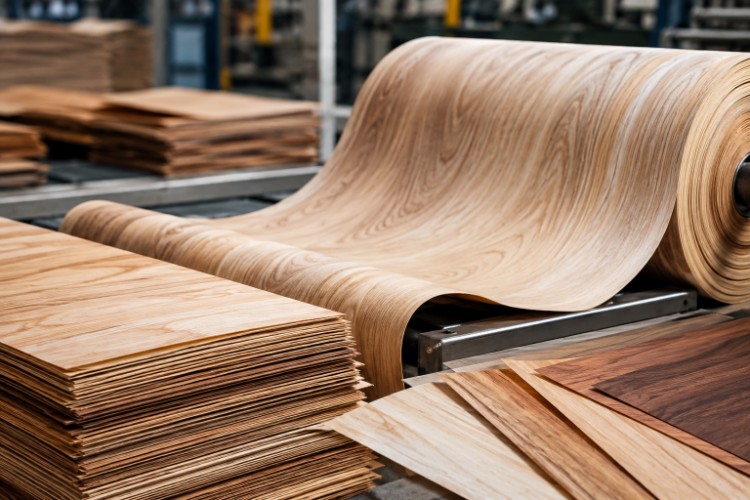
What Is Wood Veneer?
Wood veneer is a thin layer of wood cut from a natural log. Depending on the cutting method, manufacturers can produce different textures, thicknesses, and grain patterns. Common methods include rotary cutting, plain slicing, quarter slicing, and rift cut methods.
A rotary lathe can turn a log continuously while a knife removes a long veneer sheet. Slicing machines work differently. They cut the log or flitch into individual sheets. This method often produces attractive grain patterns for furniture and decorative panels.
The final thickness depends on the application and production method. Some veneer products can become extremely thin. Others require thicker sheets for structural or industrial applications. USDA forestry research describes veneer as thin wood sheets produced through slicing, sawing, or rotary cutting.
Veneer Is Still Real Wood
One common misunderstanding deserves attention. Veneer is not plastic, wallpaper, or printed wood. Quality natural veneer comes directly from timber.
The surface shows the actual structure and appearance of the wood species. Oak, walnut, birch, poplar, maple, eucalyptus, and many other species can produce veneer. Each species brings its own color, texture, density, and grain character.
That natural character explains the appeal of veneer. One tree can create many decorative sheets. Instead of using a thick solid board for every surface, manufacturers can spread the value across many products.
Why Do Manufacturers Use Veneer?
The biggest advantage is material efficiency. A relatively small amount of valuable timber can cover many panels. This helps manufacturers create premium-looking products without making every component from solid wood.
Veneer also offers design flexibility. Different cutting methods reveal different grain patterns. Designers can match sheets, rotate them, or combine them into decorative patterns.
We especially like this balance between appearance and efficiency. It is one reason veneer remains important in modern wood processing.
How Is Wood Veneer Made?
The basic process looks simple, but every stage matters. Manufacturers usually start by selecting suitable logs. They then condition, peel or slice, clip, grade, and dry the material.
A simplified production flow looks like this:
- Log selection
- Debarking
- Log conditioning
- Rotary peeling or slicing
- Clipping and grading
- Drying veneer
- Sorting and storage
- Gluing or further processing
FAO describes a similar plywood production route, including log conditioning, peeling, clipping, veneer drying, assembly, pressing, and finishing.
Cutting Methods Create Different Looks
Rotary cutting creates a continuous sheet from a rotating log. This method works especially well for plywood production. It can also produce long sheets efficiently.
Plain slicing creates more decorative grain patterns. Manufacturers often use it for furniture, doors, wall panels, and other visible surfaces. Quarter slicing and rift cut techniques can produce straighter and more controlled grain.
The cutting method matters because customers rarely buy veneer for thickness alone. They buy the appearance too. A beautiful grain pattern can make an ordinary room feel much more expensive.
From Raw Veneer to Usable Sheets
Freshly cut veneer contains a large amount of water. We often call this material wet veneer or green veneer. It cannot simply go straight into every gluing or pressing operation.
The manufacturer first clips the material to suitable sizes. Workers or automated systems then remove damaged sections and sort the sheets by quality.
After that, the drying process becomes critical. The goal is not merely to make the wood feel dry. Manufacturers need to control its moisture content for the next production stage.
Why Is Veneer Drying So Important?
Fresh veneer can contain high moisture, especially immediately after peeling. If manufacturers use it without proper drying, later processing may become unstable.
Controlled veneer drying reduces moisture to a suitable level. It also helps manufacturers prepare the sheets for adhesive application and further processing. FAO notes that veneer drying commonly brings sheets into a controlled moisture range before plywood gluing.
This stage also affects production costs. FAO identifies veneer drying as a major energy consumer in plywood manufacturing. That makes dryer efficiency an important factory consideration.
What Affects Drying Time?
The required drying time does not have one universal value. It depends on several production factors.
Key factors include:
- Wood species
- Veneer thickness
- Initial moisture content
- Drying temperature
- Air velocity
- Dryer design
- Veneer quality
- Final moisture target
Thicker veneer usually needs more time than very thin material. Dense wood species can also respond differently from lighter species. Therefore, manufacturers should avoid using one fixed setting for every log.
FAO reports that industrial veneer dryers can operate across different temperature ranges. Dryer design can also use multiple zones to control the drying conditions.
What Happens Inside a Veneer Dryer?
A modern veneer dryer creates a controlled environment around moving sheets. Hot air transfers heat to the veneer while moisture moves out of the wood.
Continuous systems often move sheets through several drying zones. Operators can adjust variables such as temperature, airflow, and transport speed. Research on continuous veneer drying also highlights transport rate, fan speed, dampers, and temperature as important control factors.
The goal sounds easy: remove water without damaging the sheet. In reality, that balance takes careful engineering. Dry too little, and moisture remains high. Dry too aggressively, and defects may appear.
What Types of Wood Can Become Veneer?
Almost any suitable timber should not automatically become veneer. Log quality, diameter, straightness, defects, and species all affect production results.
Common wood species include:
- Oak
- Walnut
- Birch
- Maple
- Poplar
- Eucalyptus
- Beech
- Pine
- Teak
- Cherry
Some species produce excellent decorative grain. Others offer better availability or processing characteristics. Manufacturers select the material according to the final product and market demand.
Decorative Veneer and Structural Veneer
Decorative veneer focuses strongly on appearance. Manufacturers may select attractive logs and use slicing methods that highlight special grain patterns.
Structural veneer focuses more on function. Plywood manufacturers commonly use rotary-cut veneer because it provides efficient production and large continuous sheets.
USDA research notes that high-grade veneer can feature clear faces and excellent grain patterns. It also explains that veneer quality depends on the intended end use.
This distinction matters when choosing equipment. A furniture veneer line may need different priorities from a large plywood factory.
Veneer and Particle Board Are Not the Same
People sometimes mix up veneer with particle board. They are very different materials.
Veneer is a thin layer of natural wood. Particle board uses small wood particles that manufacturers blend and press into panels.
However, the two can work together. Manufacturers can place decorative veneer over particle board to create an attractive finished surface. This combination offers a practical balance between appearance, cost, and material use.
Where Is Wood Veneer Used?
The answer is almost everywhere in modern wood products. Veneer can become part of furniture, doors, plywood, flooring, wall panels, cabinets, and decorative surfaces.
Common applications include:
- Furniture panels
- Cabinet doors
- Interior doors
- Plywood
- LVL products
- Wall panels
- Decorative boards
- Musical instruments
- Architectural surfaces
For plywood production, the process usually combines multiple veneer layers. Manufacturers apply adhesive and press the layers together. The grain direction of neighboring layers can improve the final panel's performance.
FAO identifies veneer drying, assembly, pressing, and finishing as major stages in plywood production.
Why Veneer Supports Efficient Wood Use
Wood is a valuable natural resource. Using it efficiently matters for both manufacturers and customers.
Veneer production allows a thin layer of attractive timber to cover a larger engineered panel. This approach can reduce the need for thick solid wood components.
That does not mean every veneer product automatically has a low environmental impact. Responsible sourcing, production efficiency, adhesives, energy use, and product life all matter.
Still, veneer provides an intelligent way to use the visual qualities of real wood. That idea remains surprisingly powerful.
How to Choose High Quality Veneer
Good veneer should look attractive and perform consistently. Appearance matters, but it is only part of the story.
When evaluating high quality veneer, we recommend checking:
- Uniform thickness
- Controlled moisture content
- Clean surfaces
- Limited splits
- Limited holes
- Consistent color
- Stable dimensions
- Suitable grain patterns
- Proper sorting
- Good bonding performance
Moisture deserves special attention. Research shows that moisture content can affect veneer and plywood properties, including dimensional stability and bonding behavior.
Why Moisture Content Deserves Attention
Too much moisture can create problems during gluing. Uneven moisture can also lead to inconsistent results between sheets.
For this reason, drying veneer requires more than simply increasing the temperature. Operators need to balance heat, airflow, feed speed, and final moisture content.
We always recommend evaluating the entire production line. A fast dryer cannot compensate for poor log preparation or inconsistent raw material.
Choosing the Right Veneer Drying System
For a factory, dryer selection should match production capacity and product requirements. The right system depends on veneer thickness, species, moisture content, energy source, and target output.
A practical evaluation should consider:
|
Parameter |
Why It Matters |
|
Veneer thickness |
Influences drying requirements |
|
Initial moisture |
Determines water removal load |
|
Final moisture |
Affects gluing and processing |
|
Wood species |
Changes drying behavior |
|
Production capacity |
Determines dryer size |
|
Heat source |
Influences operating cost |
|
Airflow |
Supports uniform drying |
|
Feed speed |
Controls residence time |
|
Dryer zones |
Improve process control |
A continuous system can provide steady production for larger factories. Batch systems may suit certain smaller or specialized operations.
Our approach focuses on the complete production picture. We look at the raw veneer, target output, energy source, and required moisture level before recommending equipment.
Final Thoughts: Veneer Is More Than Thin Wood
So, What Is Wood Veneer? It is thin natural wood with a surprisingly important job. It brings real wood appearance to furniture, plywood, panels, and many engineered products.
The journey from log to finished sheet involves cutting, grading, and a carefully controlled drying process. Among these stages, moisture control deserves special attention. A well-designed wood veneer dryer can help manufacturers achieve more stable sheets and smoother downstream production.
At Shandong Shine Machinery, we understand that veneer is not simply a thin piece of wood. It is the result of material selection, cutting technology, drying control, and production experience. When those pieces work together, even a thin sheet can make a big impression.
- Войдите или зарегистрируйтесь, чтобы оставлять комментарии