
 中文
中文
 English
 Russian
 Thai
Thai
 Indonesian
 Vietnamese
 Portuguese, Portugal
 French
 日本
日本
 Korean
 Hindi
Hindi
 Spanish
 Turkish
 Arabic
 Bahasa Malaysia
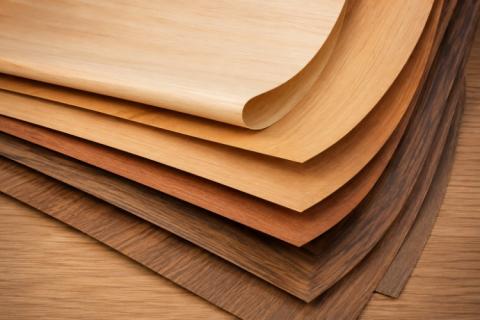
What Is Wood Veneer Thickness?
Understanding Standard Thickness
So, how thick is wood veneer? Most natural wood veneer falls between 0.5 mm and 3.2 mm, depending on its purpose and production method. Decorative veneer often stays around 0.6–1.0 mm, while thicker commercial veneer can reach 3.2 mm.
Thickness affects strength, flexibility, appearance, and processing speed. We always recommend choosing thickness according to the final application. After all, a cabinet door and structural plywood have very different jobs.
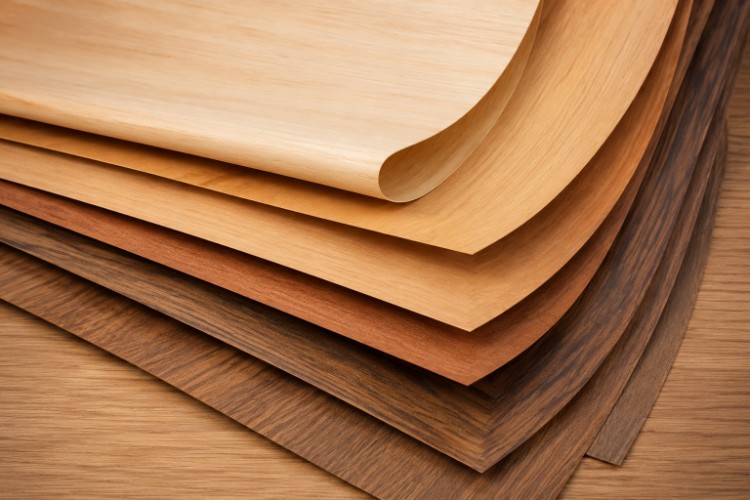
Common Veneer Thicknesses
From Thin Sheets to Thick Veneer
Veneer thickness can vary considerably across different products. A practical range looks like this:
- 0.3–0.6 mm: Ultra-thin decorative veneer
- 0.6–1.0 mm: Common furniture veneer
- 1.0–1.5 mm: Durable decorative veneer
- 1.5–3.2 mm: Thicker commercial veneer
- Around 3.2 mm: Common nominal thickness for some plywood veneer
The USDA Forest Products Laboratory notes that commercial 1/8-inch veneer equals about 3.2 mm. It also reports thickness variation during production.
Does Cutting Method Change Thickness?
Rotary, Plain, Quarter, and Rift Cut
Yes, but the cutting method does not automatically determine one fixed thickness. Rotary cutting peels veneer from a log, while slicing methods cut the wood along specific grain directions. These methods create different grain patterns and sheet characteristics.
For example, rotary veneer can produce wide sheets with efficient material use. Quarter-sliced and rift-cut veneer usually targets more controlled grain patterns. We select cutting equipment and settings based on the required thickness, species, and end use.
Why Veneer Thickness Matters
Strength, Appearance, and Yield
Thickness directly influences how veneer performs during processing. Thinner sheets save wood and work well for decorative surfaces. However, they also demand tighter control during handling and drying.
Thicker veneer generally offers better durability and handling strength. Yet it requires more drying energy and time. The Forest Products Laboratory confirms that thicker veneer dries more slowly than thinner veneer.
How Drying Affects Veneer Thickness
Drying Needs Careful Control
Freshly peeled veneer contains significant moisture, so manufacturers must dry it before many applications. Drying also affects flatness, shrinkage, color, and bonding performance. Uneven moisture can create buckling, splits, or inconsistent quality.
Our Veneer Dryer Machine helps manufacturers control this critical stage. We focus on stable heat transfer and uniform moisture reduction across veneer sheets. The USDA highlights uniform moisture, flatness, and good bonding surfaces as key drying goals.
Choosing the Right Veneer Thickness
Match Thickness to the Application
There is no universal “perfect” veneer thickness. Furniture manufacturers may prefer thin decorative sheets for efficient surface coverage. Plywood producers often use thicker veneer layers for strength and structural performance.
Before production, we suggest checking these factors:
- End use
- Wood species
- Cutting method
- Required flexibility
- Drying capacity
- Final moisture content
- Adhesive and substrate
APA explains that veneer selection, grading, and arrangement influence plywood strength, stiffness, appearance, and performance.
In short, veneer thickness looks like a small number, but it controls many production decisions. At Shine Machinery, we believe good veneer starts with the right thickness and ends with precise drying. Get those two steps right, and the wood usually does the rest.