
 中文
 English
 Russian
 Thai
 Indonesian
 Vietnamese
 Portuguese, Portugal
 French
 日本
 Korean
 Hindi
 Spanish
 Turkish
 Arabic
 Bahasa Malaysia
What Are the Different Types of Plywood?
Plywood plays a vital role in furniture, construction, interior design, and industrial manufacturing. However, not all plywood offers the same performance, appearance, or durability. Different plywood types serve different purposes, depending on wood species, adhesive, thickness, and surface quality. In this guide, we explore the most common plywood types, their applications, and the factors that influence their quality.
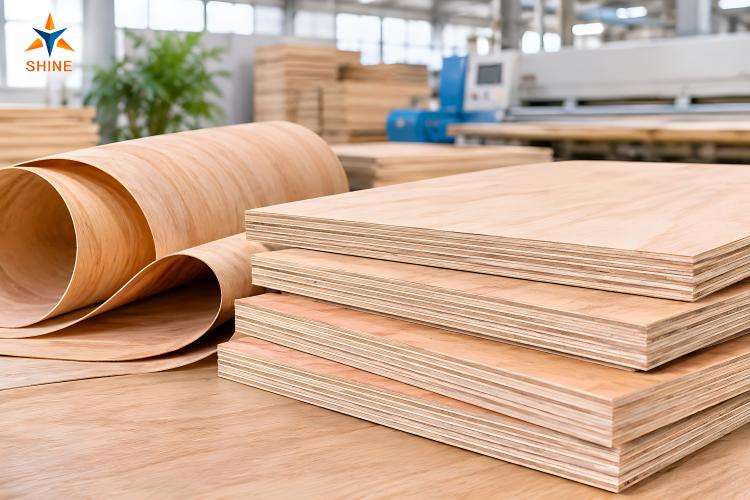
1. What Is Plywood?
Plywood is an engineered wood product made from several thin wood layers, known as veneers. Manufacturers arrange these layers with alternating grain directions and bond them using adhesive. This structure improves strength, dimensional stability, and resistance to cracking.
Compared with solid wood, plywood offers more consistent performance and efficient material utilization. Furthermore, manufacturers can select different veneer species, thicknesses, and bonding materials to meet specific requirements. The veneer quality and drying process also influence the final product's strength, appearance, and durability.
2. What Are the Different Types of Plywood?
Plywood comes in several varieties, each designed for different applications. Understanding these types helps buyers choose the right material for their projects.
Hardwood Plywood
Hardwood plywood uses veneers from hardwood species, such as oak, birch, maple, and walnut. It offers attractive grain patterns, good strength, and excellent surface quality. Therefore, furniture manufacturers often use it for cabinets, doors, tables, and decorative panels.
Hardwood plywood also provides a suitable base for laminates, paints, and wood finishes. Its appearance and mechanical properties make it a popular choice for premium furniture.
Softwood Plywood
Softwood plywood usually contains pine, spruce, fir, or other softwood veneers. Construction companies commonly use it for roof sheathing, wall panels, flooring substrates, and structural applications.
This type offers a practical balance between cost, strength, and weight. Although its surface may require additional finishing, it performs well in many building projects.
Marine Plywood
Marine plywood uses carefully selected veneers and water-resistant adhesives. Manufacturers design it to withstand humid conditions and occasional water exposure. Boatbuilding, outdoor furniture, and moisture-prone construction projects often require this material.
However, marine plywood does not automatically resist unlimited water exposure. Proper sealing, installation, and maintenance remain essential.
Decorative Plywood
Decorative plywood features attractive surface veneers, including walnut, oak, teak, and other wood species. Furniture designers use it for wall panels, wardrobes, countertops, and interior decoration.
Its appearance depends heavily on veneer selection, surface preparation, and finishing. Manufacturers need consistent veneer quality to achieve uniform colors, patterns, and textures.
Structural Plywood
Structural plywood supports demanding building and engineering applications. Manufacturers use suitable adhesives and veneer arrangements to meet specific strength requirements. Construction projects often use it for floors, roofs, walls, and supporting structures.
Engineers select structural plywood according to load requirements, moisture conditions, and relevant standards.
3. How Does Veneer Quality Affect Plywood?
Veneer quality directly influences plywood performance, appearance, and manufacturing efficiency. Uneven moisture content, cracks, excessive shrinkage, and warping can create production problems. These defects may also affect bonding, surface finishing, and finished panel stability.
Why Veneer Drying Matters
During plywood manufacturing, producers must control veneer moisture content before gluing. Excess moisture can interfere with adhesive bonding and increase drying time during later processing. Meanwhile, overdried veneers may become brittle and develop cracks.
We believe a reliable drying process is essential for producing high quality plywood. A well-designed Veneer Dryer helps manufacturers control moisture levels and improve production consistency. With proper temperature, airflow, and feeding speed, a Veneer Dryer Machine can support better veneer utilization and reduce drying defects.
4. How to Choose the Right Plywood?
Buyers should consider several factors before selecting plywood for a specific application:
- Application: Choose plywood according to furniture, construction, decoration, or structural requirements.
- Moisture resistance: Select suitable adhesive grades for indoor or outdoor environments.
- Thickness: Match panel thickness with load requirements and design specifications.
- Surface quality: Check veneer appearance, smoothness, cracks, and finishing requirements.
- Standards: Confirm applicable certifications, grades, and technical specifications.
A good purchasing decision considers more than price. Consistent quality, suitable materials, and reliable manufacturing processes often deliver better long-term value.
Conclusion
Plywood offers many options for furniture, construction, decoration, and industrial applications. Hardwood, softwood, marine, decorative, and structural plywood each serve different needs. However, manufacturers must control veneer quality and moisture content to achieve consistent results.
At Shandong Shine Machinery, we understand the importance of reliable veneer drying in plywood production. A well-controlled drying process helps manufacturers reduce defects, improve material utilization, and achieve better production results.