
 中文
 English
 Russian
 Thai
 Indonesian
 Vietnamese
 Portuguese, Portugal
 French
 日本
 Korean
 Hindi
 Spanish
 Turkish
 Arabic
 Bahasa Malaysia
How Is Plywood Made? From Logs to Sheets
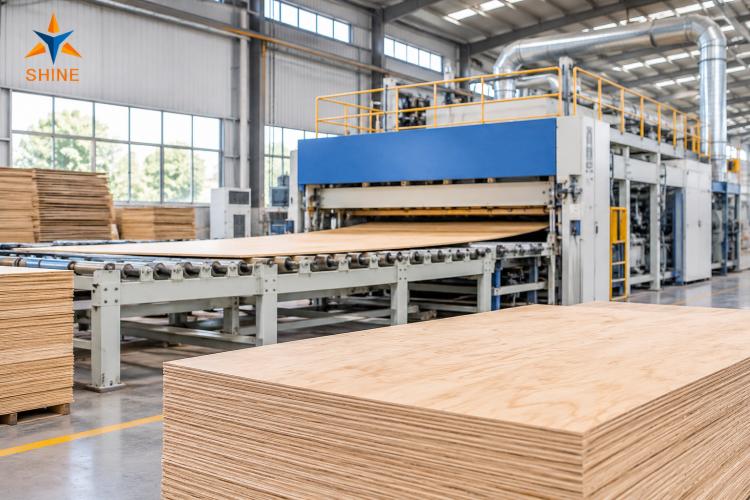
Plywood is one of the most widely used engineered wood materials worldwide. You can find it in furniture, construction, flooring, packaging, and interior decoration. But how is plywood manufactured from ordinary timber? The process involves several carefully controlled stages, from log preparation to final panel finishing.
At Shandong Shine Machinery, we understand how important veneer quality is to plywood production. Our experience in veneer drying technology gives us a close look at one of the industry's most important manufacturing stages. Let's explore how manufacturers turn natural wood into strong, stable, and high-quality plywood sheets.
1. Selecting and Preparing Raw Materials
Every successful plywood project starts with suitable raw material. Manufacturers select logs according to wood species, diameter, straightness, and intended product grade. Common choices include poplar, birch, pine, eucalyptus, and douglas fir. These materials support different applications, including hardwood plywood and softwood plywood.
Log Debarking and Conditioning
First, workers remove the bark using industrial debarking equipment. They then cut the logs into suitable lengths for further processing. Next, manufacturers soften the wood through hot water soaking or steam conditioning. This treatment improves cutting performance and helps reduce veneer cracks during peeling.
2. Producing Thin Veneer Layers
After conditioning, manufacturers send the logs to a peeling machine. The machine rotates each log against a sharp blade. This process produces continuous sheets of veneer with a controlled thickness. Manufacturers then cut these sheets into required dimensions.
Veneer Peeling and Grading
Veneer peeling directly influences the appearance and strength of finished plywood. Manufacturers inspect each sheet for knots, splits, holes, and other defects. They classify the sheets according to thickness, appearance, and intended application. Better face veneers often go into higher-grade plywood products, while suitable inner layers become core veneers.
At this stage, consistent thickness and smooth surfaces matter greatly. Even small defects can affect later bonding and panel quality.
3. Drying Veneers to the Right Moisture Content
Freshly peeled veneers contain considerable moisture. Manufacturers must remove excess water before applying adhesive. Otherwise, excessive moisture can interfere with bonding and create problems during pressing.
Why Does a Veneer Dryer Matter?
A professional Veneer Dryer helps manufacturers achieve consistent moisture levels across veneer sheets. Industrial roller dryers transport veneers through heated drying zones. Hot air circulates around the sheets and gradually removes moisture.
The correct drying temperature and feeding speed depend on wood species, thickness, and initial moisture content. Manufacturers must also avoid overdrying, which can make veneers brittle and increase material waste.
A modern Veneer Dryer Machine offers several important advantages:
- Consistent drying: Helps maintain uniform moisture content.
- High efficiency: Supports continuous industrial production.
- Better veneer quality: Reduces moisture-related defects.
- Lower material waste: Helps prevent excessive drying damage.
- Stable production: Provides reliable preparation for gluing.
In our view, veneer drying deserves particular attention. Even excellent raw materials cannot guarantee strong plywood when manufacturers overlook moisture control.
4. Applying Adhesive and Arranging Veneers
Once the veneers reach the required moisture content, manufacturers prepare them for bonding. Workers or automated equipment apply adhesive to selected veneer surfaces. Common adhesive systems include phenol-formaldehyde and urea-formaldehyde resins. The choice depends on the plywood's intended use and performance requirements.
Understanding Cross Graining
Manufacturers arrange several thin layers with alternating grain directions. This technique is called cross graining or cross-lamination. For example, the grain direction of one layer usually runs perpendicular to the next.
This arrangement improves dimensional stability and helps plywood resist splitting, bending, and warping. The outer layers provide appearance, while the inner layers contribute strength. Together, they create a balanced panel structure.
5. Hot Pressing and Bonding
After lay-up, manufacturers transfer the assembled veneers into a hot press. The equipment applies controlled heat and pressure to bond the layers together. Heat activates the adhesive, while pressure brings the veneer surfaces into close contact.
Pressing temperature, pressure, and time depend on adhesive type, panel thickness, and production specifications. Proper control helps manufacturers achieve reliable bonding and consistent panel strength.
This stage transforms loose veneer layers into a solid engineered wood panel. It is where the plywood finally takes shape.
6. Trimming, Sanding, and Quality Inspection
After pressing, manufacturers allow the panels to cool when necessary. They then trim the edges to standard dimensions and sand the surfaces. These finishing operations improve appearance and prepare plywood for further processing.
Final Quality Checks
Before shipment, quality inspectors evaluate several important parameters:
- Thickness: Checks panel dimensions and uniformity.
- Bonding strength: Evaluates adhesive performance.
- Moisture content: Checks moisture conditions.
- Surface quality: Identifies cracks, holes, and rough areas.
- Flatness: Checks warping and dimensional stability.
- Appearance grade: Determines the appropriate product classification.
Manufacturers may also conduct formal tests according to applicable industry standards. These inspections help ensure that finished plywood meets customer requirements.
7. What Determines High-Quality Plywood?
High-quality plywood does not depend on just one machine. Instead, manufacturers must coordinate every production stage. Suitable raw materials, accurate veneer peeling, controlled drying, reliable adhesives, and proper pressing all contribute to the final result.
For plywood manufacturers, we believe drying technology deserves special attention. A well-designed drying line supports high efficiency while maintaining consistent veneer quality. Modern roller dryers also help factories improve production continuity and reduce unnecessary material losses.
At Shandong Shine Machinery, we focus on developing industrial veneer drying solutions for plywood manufacturers. We understand that stable drying performance supports better production results.
Conclusion
So, how is plywood manufactured? The process starts with log preparation and veneer peeling. It continues through drying, adhesive application, cross-grain assembly, and hot pressing. Finally, manufacturers trim, sand, and inspect the finished panels.
Each stage contributes to the strength, stability, and appearance of plywood. Among them, veneer drying plays a particularly important role in preparing materials for reliable bonding.
If you want to improve your plywood production line, choosing suitable drying equipment is a practical starting point. The right technology can help your factory achieve better consistency, higher efficiency, and less material waste.